

Baltic Birch Overview
The Benchmark of Plywood: Baltic Birch
Baltic Birch is considered the benchmark of hardwood plywood because it is engineered for consistency, strength, and precision, not just appearance. Unlike standard plywood that often uses mixed cores or softwood layers, Baltic Birch is made from multiple, uniform birch veneers bonded under strict manufacturing standards.
This construction gives it predictable performance, tight tolerances, and structural reliability that professionals rely on for cabinetry, furniture, flooring substrates, formwork, and CNC machining. It machines cleanly, holds fasteners exceptionally well, and remains stable over time.
Baltic Birch isn’t considered the best hardwood plywood because it’s trendy or decorative – but because it performs better where precision, durability, and repeatability matter.
The Famous Edge
You can spot Baltic Birch from across the room. While standard plywood edges are rough, splintery, and filled with voids that need to be hidden, Baltic Birch is designed to be seen.
- The “13-Ply” Standard: A standard ¾” (18mm) domestic sheet has just 5 to 7 layers. Baltic Birch packs 13 solid hardwood plies into the same thickness. This density creates a striking, architectural “striped” edge that is aesthetically pleasing enough to leave exposed.
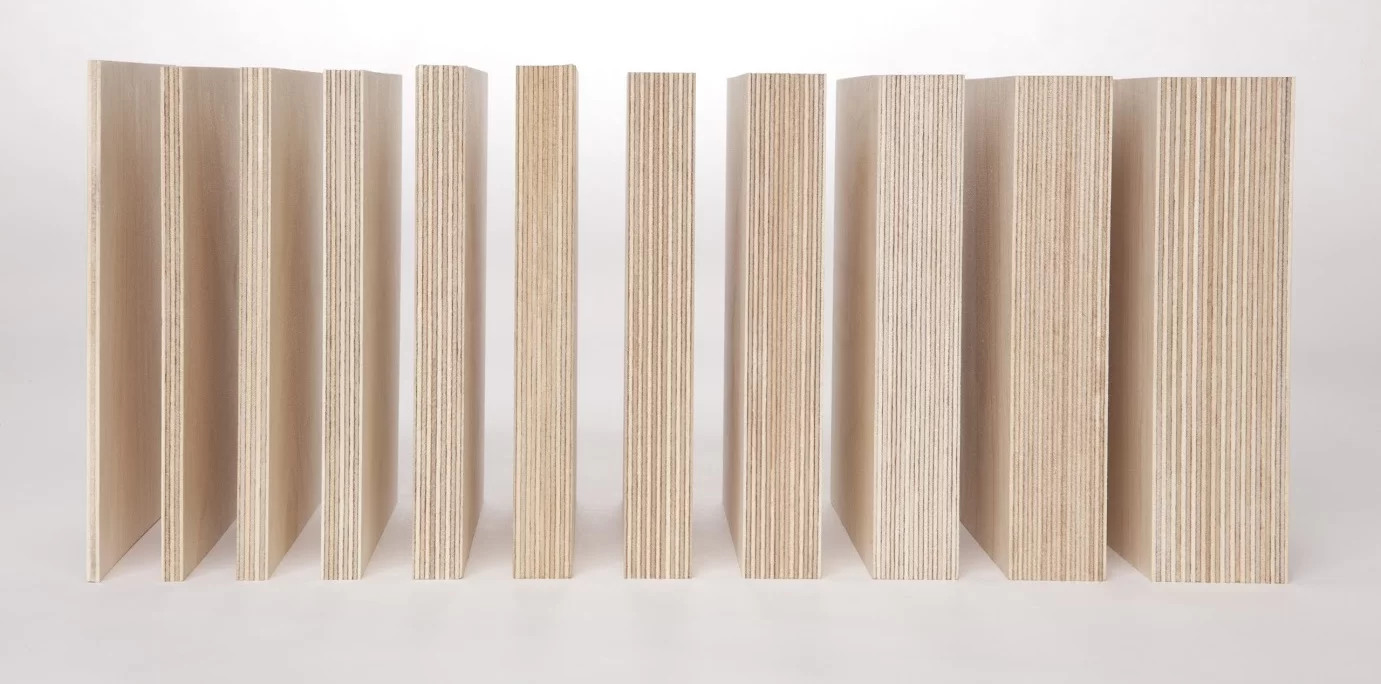
- No Edge Banding Required: Because the core is virtually void-free and solid throughout, you don’t need to waste time or money applying iron-on edge banding. Simply sand the edge, clear coat it, and the result is an edge that isn’t hidden or patched—but often intentionally showcased in cabinetry, furniture, CNC-cut components, and architectural details.
- Superior Face Veneers: Unlike the paper-thin veneers on domestic plywood (which can sand through instantly), Baltic Birch features thick, outer face veneers ranging from 1.3mm to 1.6mm. This gives you a substantial margin for sanding and finishing without ruining the sheet.
From Structure to Surface: What Makes It Exceptional
Minimal / Near-Void-Free Core
Unlike standard plywood, which hides “air pockets” behind the face veneer, Baltic Birch is solid hardwood throughout. This allows for exposed joinery (dadoes, dovetails) without finding a hollow spot that compromises strength.
Thicker Face Veneers (~1.5mm)
Unlike the paper-thin veneers on domestic plywood (which can sand through instantly), Baltic Birch features thick, outer face veneers ranging from 1.3mm to 1.6mm. This provides a substantial margin for sanding and finishing without risking sand-through.
Superior Screw Holding
The dense, 100% birch core allows fasteners to bite instantly and hold tight. Screws resist stripping and pull-out over time, ensuring hinges and drawer slides remain secure for the life of the furniture.
Dimensional Stability
Built with a high ply count and alternating grain directions (cross-banding), the sheet neutralizes internal tension. This structure makes it exceptionally resistant to warping, bowing, or twisting, even in changing humidity.
Machining & CNC Precision
The uniform density makes it the premier material for modern fabrication. It routes cleanly without splintering or tool chatter and is ideal for laser cutting due to its consistent glue lines and lack of voids.
High Strength-to-Weight Stiffness
Baltic Birch delivers high structural strength without excessive weight. It provides rigidity and load-bearing performance while remaining manageable for handling and installation.
Industrial Durability (Film-Faced)
When coated with a phenolic film, the solid core provides the impact resistance needed for heavy-duty concrete formwork, allowing panels to be reused many times more than standard ply.
Comparative Analysis:
Baltic Birch vs. Alternatives
| Image | Core Construction | Face Veneer Thickness | Strength & Screw Holding | Dimensional Stability & Thickness Tolerance | Moisture Resistance | Edge Quality & Voids | Typical Applications | |
|---|---|---|---|---|---|---|---|---|
| Baltic Birch | 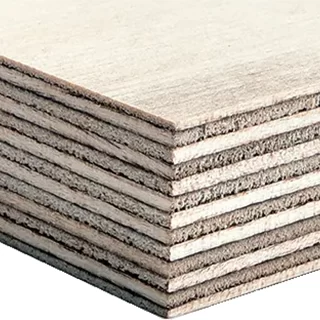 |
100% birch, multi-ply, uniform hardwood core | Thick structural veneers (~1.3–1.6 mm) | Excellent face and edge screw holding | Very stable, tight thickness tolerances | High (Exterior Glue Available) | Near void-free, clean exposed edges | Near void-free, clean exposed edges |
| Asian Import Birch | 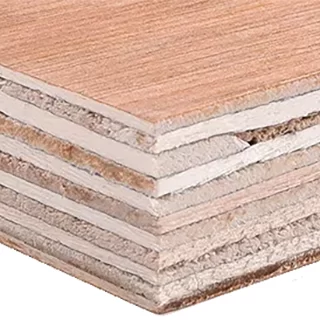 |
Mixed core (birch faces with softwood or mixed species core) | Mixed core (birch faces with softwood or mixed species core) | Moderate, inconsistent edge holding | Moderate, inconsistent edge holding | Low/Moderate (Risk of delamination) | Inconsistent / Dark Glue Lines / Voids | General cabinetry, interior furniture, non-precision use |
| Domestic Hardwood Plywood | 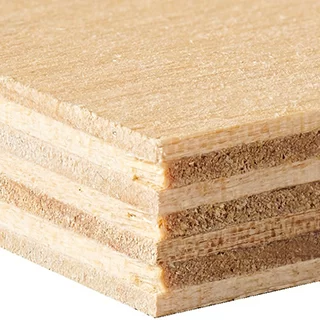 |
Veneer Core (Softwood/Fir – 5-7 Plies) | Thin to moderate veneers | Good face holding, weaker edge holding | Moderate stability, standard tolerances | Low (Interior Glue Only) | Core voids common, edge banding usually required | Kitchen Cabinet Boxes, Built-ins |
| Softwood Construction Plywood | 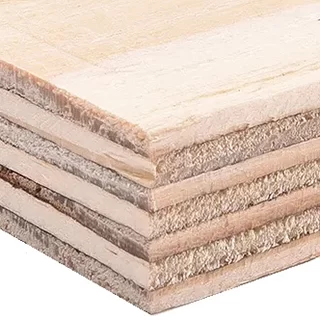 |
Softwood plies (fir/pine), structural core | Rough / Knotted (Not for sanding) | Strong structurally, poor edge holding | Strong structurally, poor edge holding | Moderate/High (If CDX rated) | Very Rough / Large Voids | Sheathing, Subfloors, Framing |
| MDF / Particleboard | 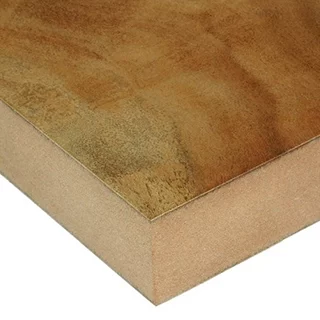 |
Compressed wood fibers or particles | No veneer (homogeneous core) | Poor screw holding | Flat but sensitive to moisture | Very low unless specially treated | Very low unless specially treated | No voids, but fragile and crumbly edges |